

A host of applicants to the open roles at ADIGILEAP are keeping Matt Ellis, Julia Alexander and...
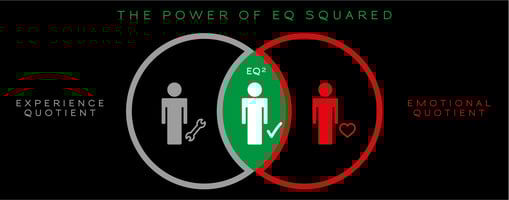
As I’ve said previously, Digital Transformation requires EQ2 (Experience Quotient * Emotional Quotient)
Emotional Quotient is almost impossible to build through a screen alone: the trust, empathy, and shared understanding that come from being physically together.
Don't get me wrong, I'm not arguing for a ban of remote work!
I'm advoating co-location as a deliberate, strategic choice — particularly when teams are navigating the kind of complex, people-centred change that transformation demands.
Purely Digital Relationships are Tough!
We’ve all experienced it. The video call where everyone nods politely but might not really be listening. The stakeholder who seems supportive in meetings but quietly disengages between them.
Remote collaboration is good for information transfer. It is far less effective for building the emotional fabric that makes transformation work:
- Reading the room when a scientist is frustrated but won’t say so on a Teams call
- Catching the sideways glance between two lab managers that tells you there’s an unspoken disagreement
- Having the unplanned corridor conversation that surfaces the real blocker — not the one in the RAID log
These moments don’t happen in calendar invites. They happen in shared physical space.
Why EQ² Depends on Proximity
I described Emotional Quotient as showing up through:
- Genuine empathy for the scientific end user
- Curiosity about why current behaviours exist
- Transparency about trade-offs and constraints
- Trust built through listening, not just telling
- Respect for the pressure scientists and lab leaders operate under
Every one of these is accelerated by co-location. Here’s why:
Empathy requires observation
You can’t truly empathise with a scientist’s workflow frustration from a remote discovery workshop. You need to stand beside them at the bench, watch them toggle between six applications, see the Post-it notes stuck to their monitor because the system doesn’t support their actual process. Empathy is built through presence, not just interviews.
Curiosity needs spontaneity
The best insights don’t come from structured questions. They come from the "Oh, that’s interesting — why do you do it that way?" moment that happens when you’re physically there. When you’re co-located, curiosity isn’t something you schedule into a sprint ceremony.
Trust is built in the margins
Trust isn’t established in workshops or steering committees. It’s built in the margins — over coffee, walking to the car park, in the five minutes before a meeting starts. These micro-interactions compound over time into something remote work simply cannot replicate as fast.
An experienced consultant or team member who is physically present in the lab, the office, and the corridor will:
- Build trust faster
- Surface resistance earlier
- Understand context more deeply
- Create psychological safety more naturally
- Turn sceptics into collaborators more effectively
None of this means remote work has no value. Of course it does — for focused delivery, for documentation, for flexibility. But the transformational moments — the shifts in mindset, the breakthroughs in stakeholder alignment, the turning points where resistance becomes engagement — these overwhelmingly happen face-to-face.
EQ² is about combining what you know with how you make people feel.
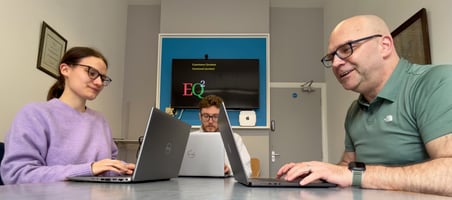
At ADIGILEAP we are all about co-location (as you can tell from the photos below). We spend as much time as we can together, with clients and with partners.
Co-location doesn’t guarantee emotional intelligence — but it creates the conditions where emotional intelligence can actually operate.
In an era where remote work is the default and on-site presence is increasingly seen as optional, the teams that choose to show up — physically, consistently, with genuine curiosity and empathy — will be the teams that actually deliver transformation, not just talk about it.
The lab doesn’t transform through architecture diagrams and vendor selections alone. It transforms when people trust each other enough to change how they work.
And that trust? It’s built in the room. Not on the call.
If you’d like to work with a team that believes in showing up — in every sense — take a look at our services.