



Nathan and Digi recently took a week off to do some travelling, and went up Graig Fawr near...
Digital lab transformation is rarely blocked by a lack of technology.
In most organisations, the tools already exist—or at least, the shortlist does.
What actually slows progress is something far less visible: friction.
Friction shows up as mistrust between teams, change fatigue in the lab, competing priorities across IT and science, and a growing disconnect between strategy decks and day-to-day reality. When programmes stall, it’s tempting to blame platforms, vendors, or architecture choices. In practice, the real constraint is almost always human.
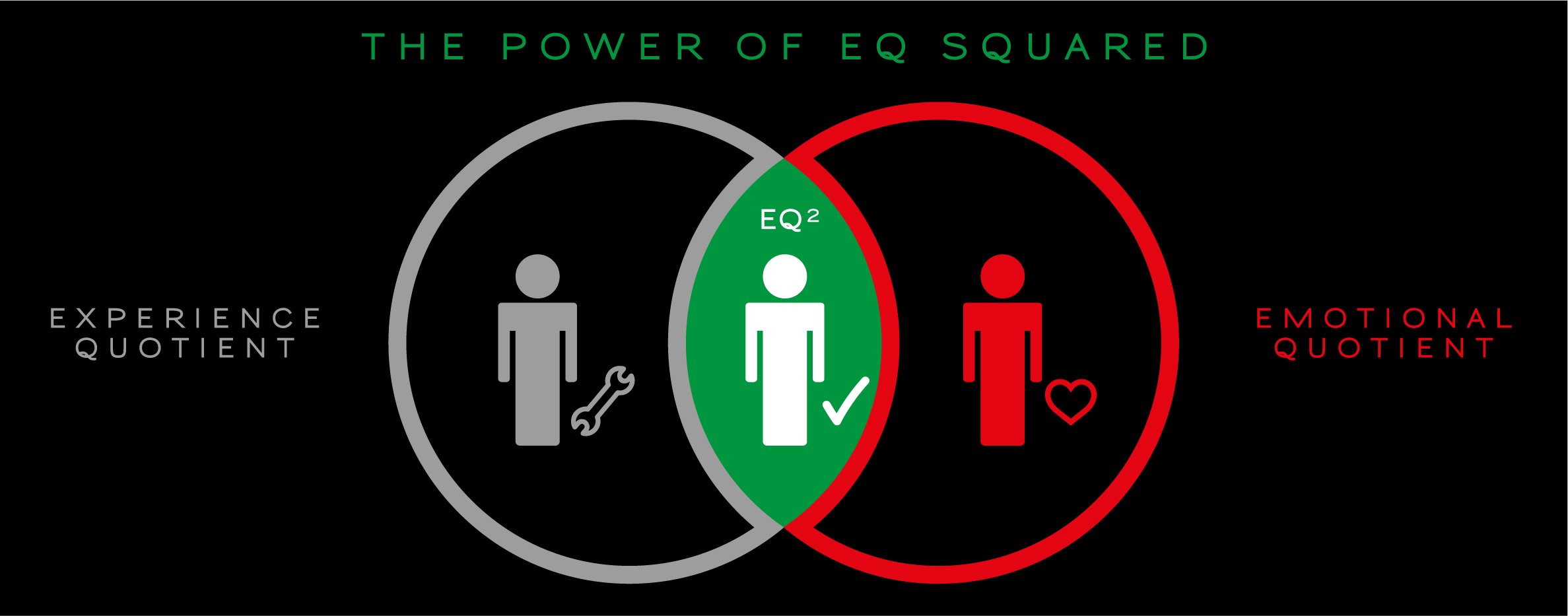
This is why I’ve become increasingly convinced that successful transformation requires EQ²:
Experience Quotient * Emotional Quotient = EQ²
The False Comfort of “More Technology”
Most digital lab roadmaps start with a reasonable analysis of the Lab of Today and discover:
- Data silos
- Paper and manual processes
- Application sprawl
- Accumulated technical debt
These issues are real, measurable, and familiar to anyone working in modern scientific environments.
The destination is equally clear: the Lab of Tomorrow:
- An AI-ready‑ data continuum across the value chain
- Integrated and automated workflows
- Intuitive, seamless user experience
- Plug-and‑play architecture
This has become the widely accepted vision of where lab operations need to be.
Even though the goals are clear, many transformation programmes that correctly identify these problems still struggle to make meaningful progress.
Why?
Because understanding the technical gap is only half the equation!
Where Transformation Really Breaks Down
In my experience, transformation most often breaks down in the space between design and adoption.
Architectures are approved. Vendors are selected. Programmes are funded.
But then momentum slows.
Scientists feel that solutions are being imposed on them rather than built with them. IT teams feel pressure to “standardise at all costs.” Leaders struggle to reconcile long-term strategy with short‑-term‑ operational reality. Over time, scepticism grows, engagement drops, and the programme quietly shifts from “transformational” to “incremental.”
This isn’t a failure of intent or intelligence. It’s a failure to address the emotional reality of change.
That’s where Emotional Quotient becomes as critical as Experience Quotient.
Experience Quotient: Necessary, but Not Sufficient
Don't get me wrong, experience and skills matter a lot!
Experience allows teams to:
- Recognise patterns early
- Avoid repeating past mistakes
- Move faster towards architectures that actually work
- Translate ambition into credible, executable roadmaps
Without experience, transformation programmes burn time rediscovering lessons the industry has already learned.
But experience alone does not guarantee success.
In fact, highly experienced teams can still fail if their knowledge is delivered without empathy, context, or trust. Experience tells you what needs to change. It does not automatically help people feel safe enough to change it and want to work with other people to change it.
Emotional Quotient: The Multiplier
Emotional Quotient is often misunderstood as “soft” or secondary. Actually, it's the multiplier that determines whether experience creates value or resistance.
Emotional Quotient shows up as:
- Genuine empathy for the scientific end user
- Curiosity about why current behaviours exist
- Transparency about trade-offs‑ and constraints
- Trust built through listening, not just telling
- Respect for the pressure scientists and lab leaders operate under
When teams bring emotional quotient into transformation work, conversations change. Resistance softens. Concerns surface earlier. Adoption becomes a shared goal rather than a forced outcome.
This is why EQ² matters.
EQ² in Practice: Bridging the Gap
When Experience Quotient and Emotional Quotient are combined, something important happens.
Experience ensures the programme is grounded in reality.
Emotional quotient ensures the programme is designed and implement for people.
Together, they:
- Reduce friction between IT and science
- Turn sceptics into contributors
- Replace “compliance” with genuine buy-‑in
- Increase the likelihood that new ways of working actually stick
- Create a team where the people actually enjoy working together
This combination is what allows organisations to move from today’s fragmented, manual, siloed environments toward the integrated, automated, AI-ready‑ labs they aspire to build.
A Different Question for Leaders
When digital lab initiatives stall, leaders often ask:
“Did we choose the right platform?”
A more useful question is:
“Did we bring EQ² to the table?”
Did we pair credible experience with genuine empathy?
Did we design not just for technical correctness, but for human adoption?
Did we treat transformation as a people-centred‑ journey, not just a systems upgrade?
If the answer is no, MORE Technology is rarely the solution
Final Thought
Digital lab transformation is not ultimately about software, data models, or architectures. Those are enablers.
At its core, transformation is about people changing how they work—and trusting that the change is worth making.
Experience can be gained. Skills can be learned.
But empathy, trust, and understanding are what turn change into progress.
That’s the power of EQ².
If you'd like to hire a team founded on the principles of EQ² then take a look at our SERVICES.